Nexus POS is a complete and innovative point-of-sale management system, designed to serve the retail sector by simplifying the management process.
Approved by the Bank of Mozambique, Nexus is designed to serve the retail sector and is flexible enough for food establishments, simplifying the order process and payments.
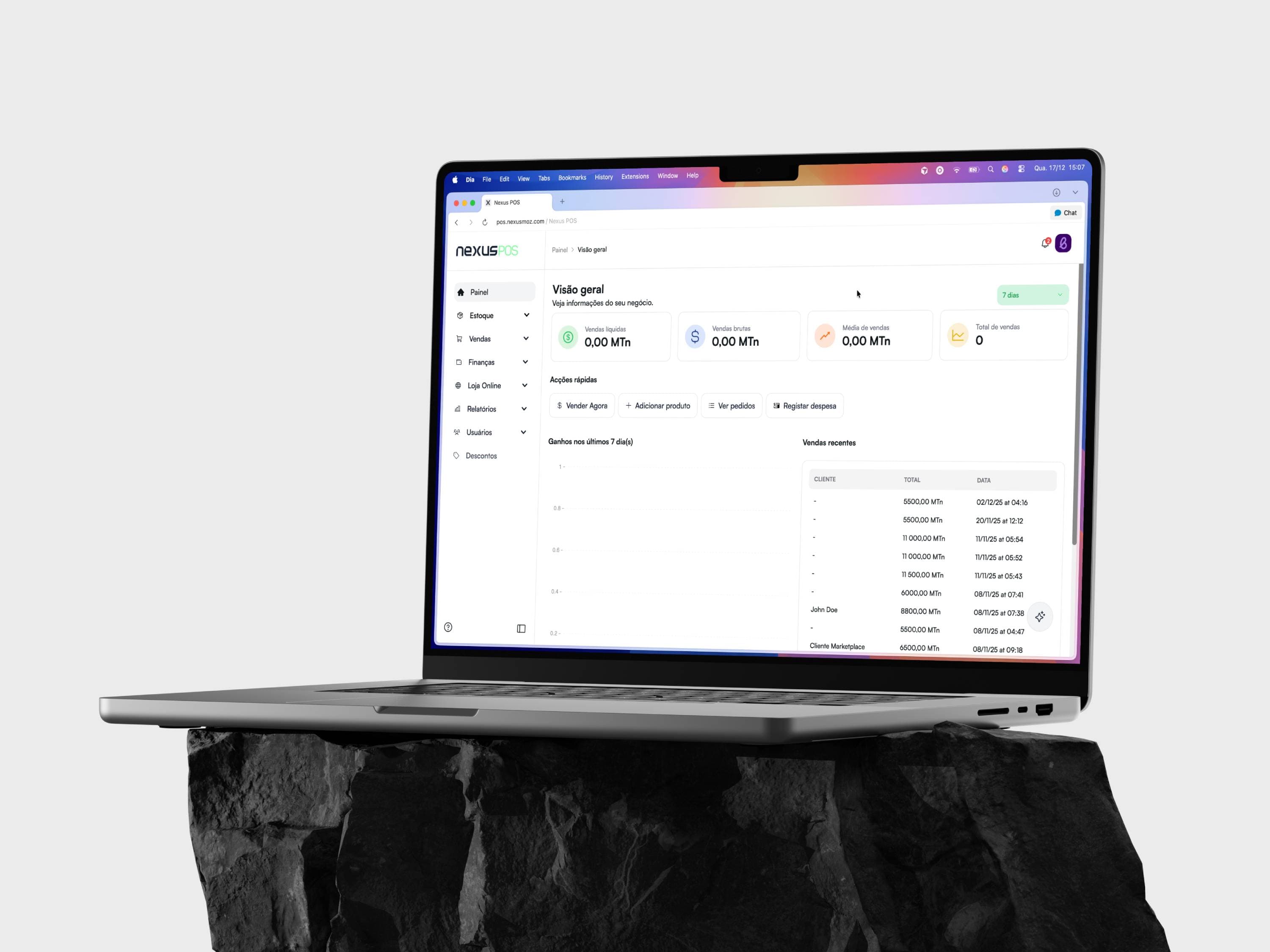
With intelligent product registration, product data is automatically populated via image recognition or barcode scanning, and categorized by type and brand. Suggested prices take inflation and market comparisons into account.
Nexus offers supplier management and automatic quotation requests via email. It enables efficient cash register opening and closing, optimizes batch management, and generates sales metrics. Nexus POS also includes invoicing with payment links directly on the invoice, integrating M-Pesa and cash for a simplified and complete experience.
In addition, the system features a modern interface with integrated chat for real-time feedback. Built for digital transformation, Nexus POS represents the future of sales management in Mozambique, with a certification process underway to further strengthen its credibility and local market presence.
This platform was built with modern technologies, following best practices for scalability and maintainability.
Backend Architecture
The backend follows SOLID principles and a modular architecture, ensuring clean code and easy extensibility. We implemented rigorous Test-Driven Development (TDD) to maintain high code quality and reliability.
Core Technologies:
- TypeScript for static typing and enhanced development safety.
- PostgreSQL for robust data persistence.
- Prisma as the ORM for type-safe database access.
- Redis for efficient caching and performance optimization.
- AI SDK and OpenAI for LLM-powered text processing.
- Express.js as the web framework for building RESTful APIs.
- Docker and Docker Compose for containerization and orchestration.
- Sentry for error monitoring and performance tracking in production.
- OpenPanel for analytics and event tracking.
- Jest as the testing framework to ensure code quality and coverage.
Key Features:
- Intelligent chat functionality for real-time user interaction
- Automatic product data population from product images using image recognition
- Multi-level authentication system (Admin, Company, Employee)
- File upload and cloud storage
- Transactional email delivery
- Automatic API documentation via Swagger
- Real-time error monitoring and tracking
Frontend Architecture
The frontend uses Feature-Sliced Design (FSD) architecture, which enabled smooth evolution of the platform over time and facilitated team collaboration through clear separation of concerns.
Tech Stack:
- React for building interactive user interfaces
- Vite for fast development and optimized builds
- PWA capabilities for offline functionality and app-like experience
- Tailwind CSS v4 for modern and responsive styling
This architectural approach allowed the platform to scale effectively while maintaining code quality and developer productivity.